
In this guide
Smart Door Lock vs Traditional Lock: Which Is Better?
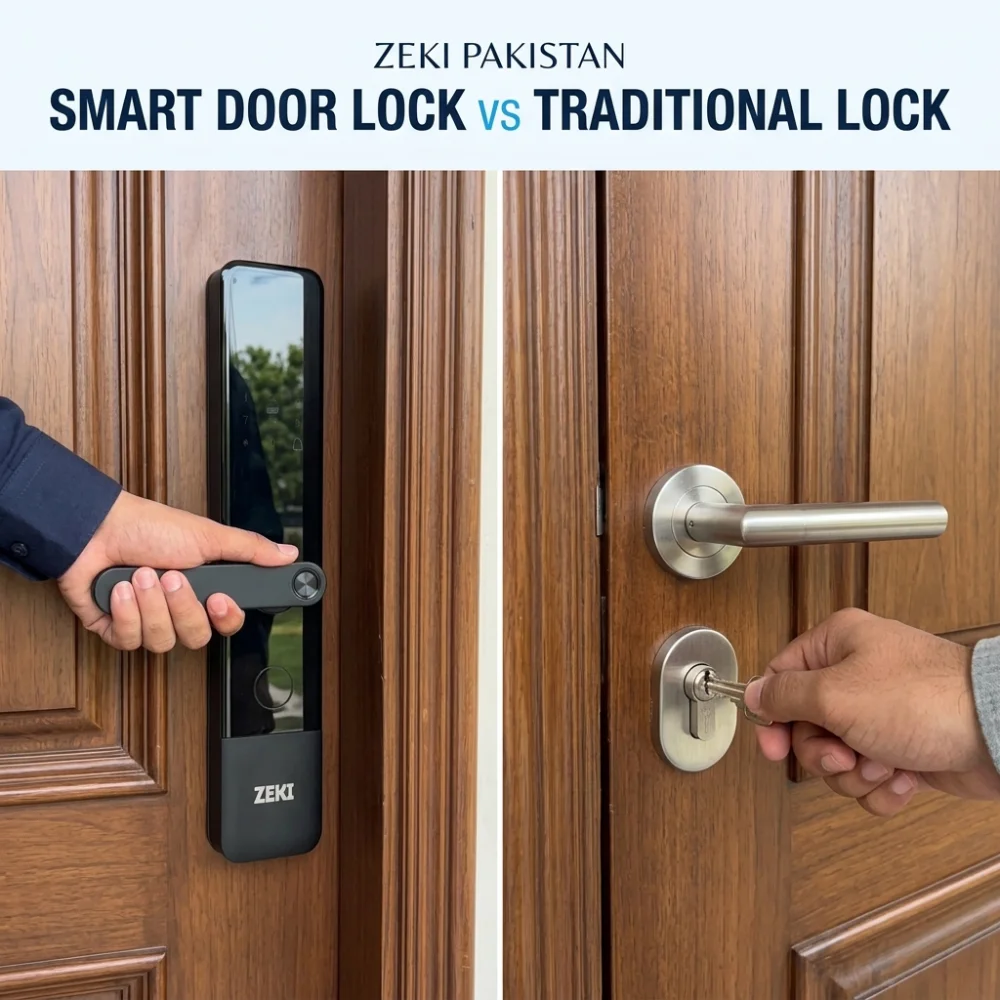
A smart door lock is often the better choice if you want keyless access, multiple authorized users, PIN codes, biometric entry or supported remote management features.
A traditional mechanical lock can be the better fit if you prefer a simpler locking system without batteries, apps or electronic maintenance.
Neither option is automatically more secure. Real protection depends on the quality of the hardware, door construction, installation and how access is managed.
For Pakistani homes, the most useful comparison is not simply modern versus old technology. It is about which system fits your entrance, security needs, budget and daily routine.
How Does a Traditional Door Lock Work?
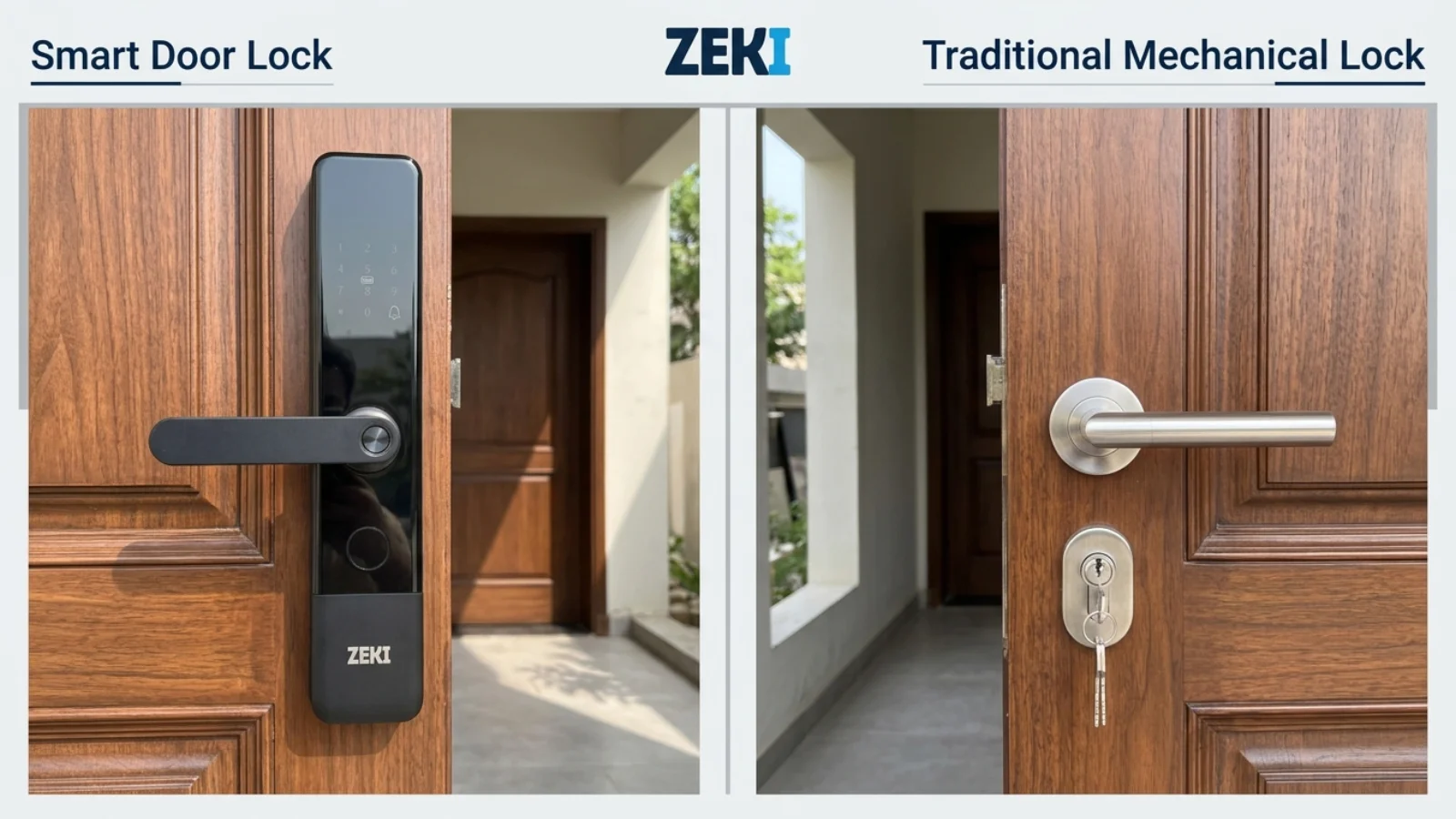
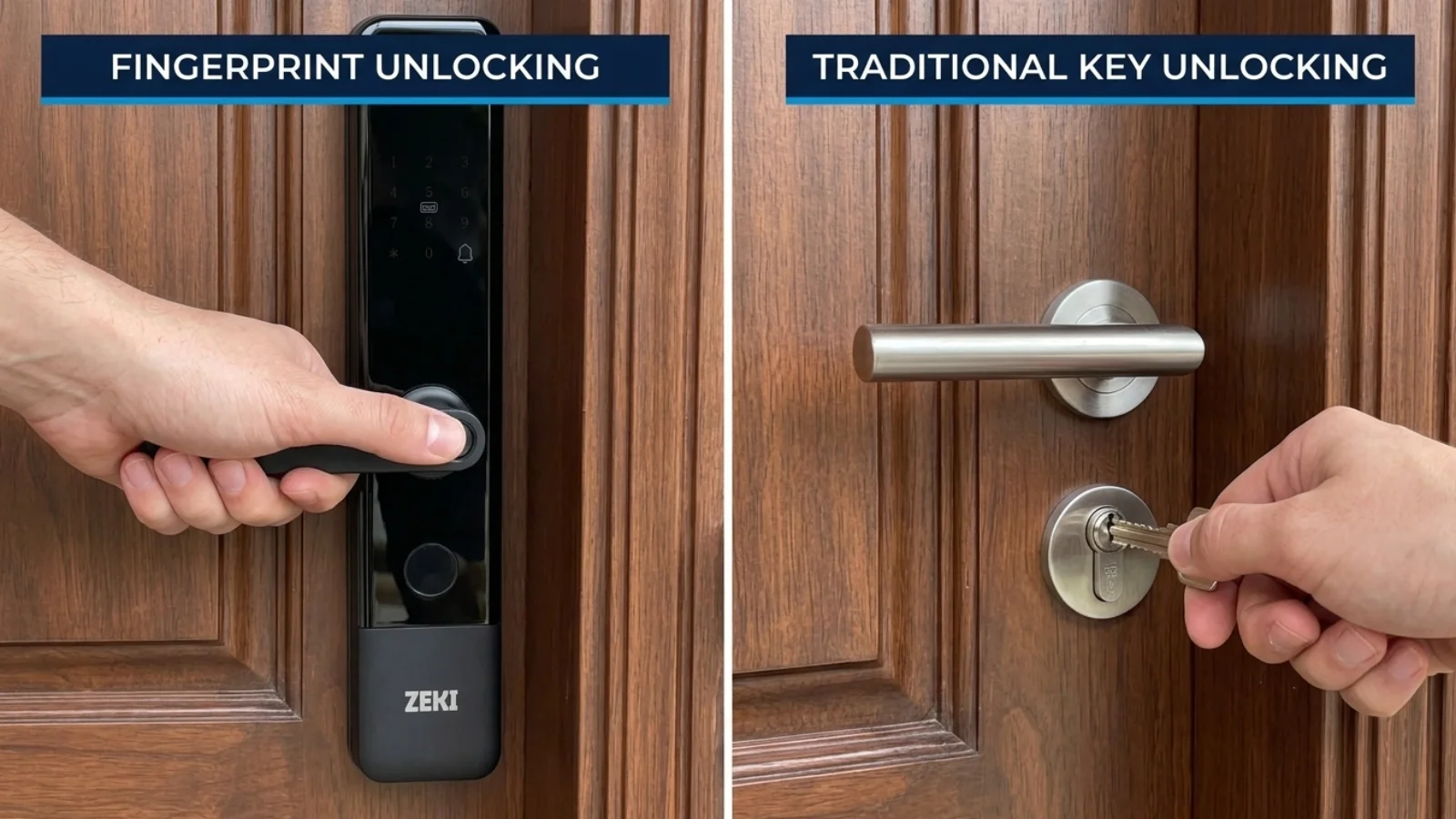
A traditional door lock normally uses a physical key to operate a mechanical locking mechanism.
When the correct key is inserted and turned, it operates the cylinder or locking mechanism, allowing the latch or bolt to be released.
Different mechanical lock designs use different security mechanisms. A basic door handle lock should not be treated as equivalent to a high-quality mechanical deadbolt or multipoint locking system.
Advantages of Traditional Locks
Limitations of Traditional Locks
Physical keys can be lost, misplaced or copied. Managing several users may require distributing more keys.
If a key is lost or an unauthorized duplicate is suspected, restoring access control may require rekeying or replacing the appropriate lock components.
A conventional mechanical lock also does not ordinarily provide fingerprint authentication, individual digital PINs or connected activity notifications.
How Does a Smart Door Lock Work?
A smart door lock combines electronic authentication with a physical locking mechanism.
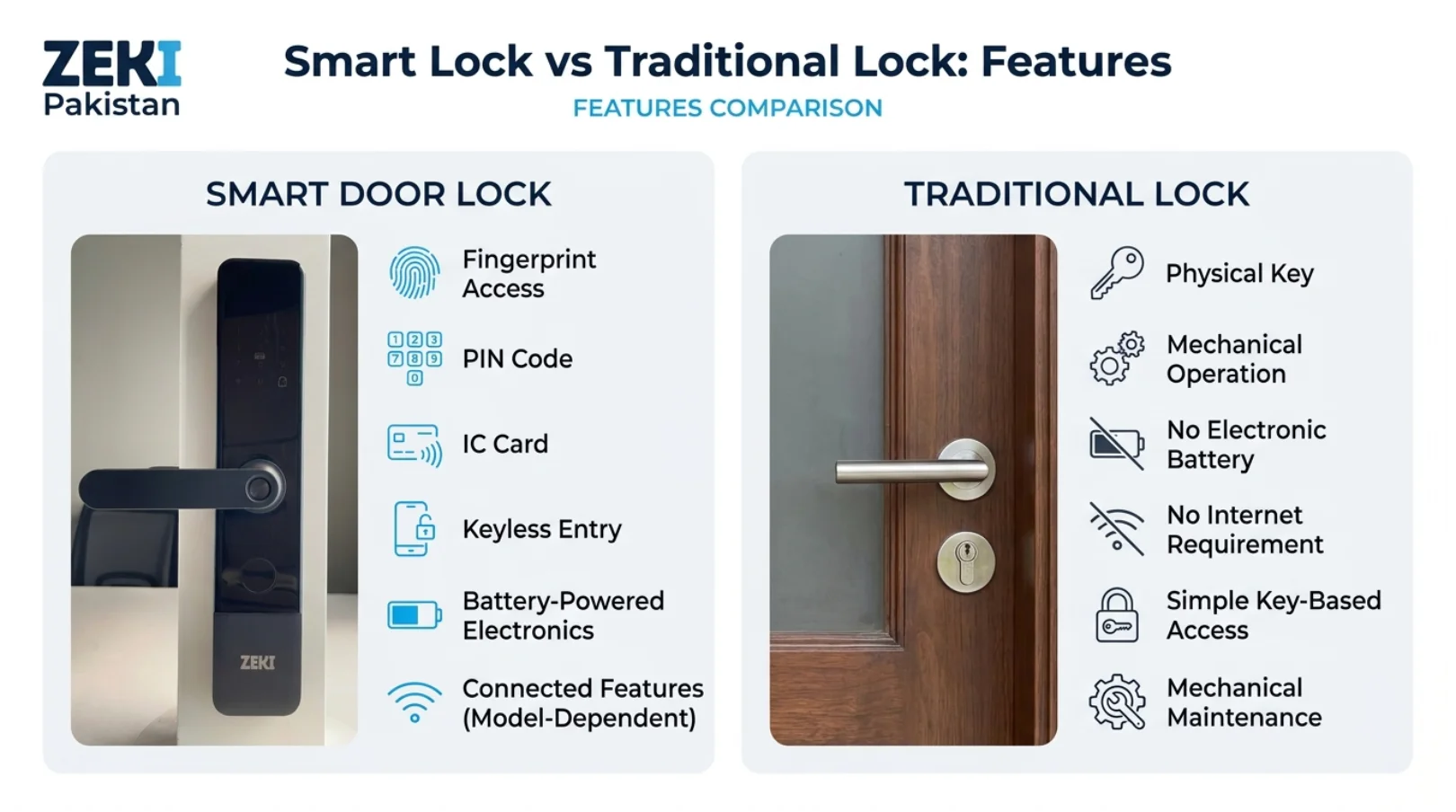
Depending on the model, the lock may recognize a registered fingerprint, PIN, IC card, facial biometric information or another supported credential.
After successful authentication, the system authorizes the electronic mechanism to release the lock.
Some models also support Bluetooth, Wi-Fi, gateways or connected management through a compatible app.
Common Smart Lock Access Methods
A basic fingerprint lock and a premium multi-biometric model may have very different functions, battery systems, connectivity and emergency access methods.
Smart Door Lock vs Traditional Lock: Complete Comparison
The table below compares typical characteristics. Actual capabilities and security depend on the specific products selected.
| Feature | Smart Door Lock | Traditional Lock |
|---|---|---|
| Primary Access | Fingerprint, PIN, card or other supported credentials | Physical mechanical key |
| Keyless Entry | Available on compatible models | Not normally provided |
| Biometric Access | Available on selected models | Not available on a fully mechanical lock |
| Battery Requirement | Generally needed for electronic functions | Not required for mechanical operation |
| Internet Requirement | Local unlocking may work without internet | Not required |
| Remote Management | Available on supported connected configurations | Not normally available |
| Multiple Users | Individual credentials may be configured | Physical keys must be distributed |
| Lost Access Credential | Digital credentials may be removed or changed where supported | May require rekeying or hardware changes |
| Electronic Failure Risk | Electronic components require maintenance | No electronic system in a fully mechanical lock |
| Mechanical Wear | Still possible in the lock body and door | Still possible in the cylinder and lock body |
| Installation | May require accurate mortise and door preparation | Depends on lock type and existing hardware |
| Initial Cost | Often higher due to electronic features | Basic models may cost less; premium hardware can cost more |
| Security | Depends on hardware, electronics, credentials and installation | Depends on cylinder, physical construction and installation |
There Is No Universal Winner
A high-quality mechanical lock may be physically stronger than a poorly designed smart lock. A well-built smart lock, however, can add significant convenience and more flexible access management.
Smart Door Lock vs Traditional Lock: Which Is More Secure?
Security should not be judged only by whether a lock has a fingerprint sensor or a physical key.
A lock's protection depends on how well its hardware resists unauthorized entry, how its credentials are controlled and whether it is correctly installed.
Physical Security Still Matters
The quality of a mechanical cylinder, mortise, strike plate, door frame and associated locking components can significantly affect resistance to forced entry.
Smart locks are not exempt from these physical considerations simply because they have advanced electronics.
Traditional Lock Security Considerations
A mechanical lock relies heavily on its physical security design.
Risks can involve lost keys, unauthorized duplicates, cylinder weaknesses or poor installation.
Higher-quality mechanical systems may provide stronger protection against particular physical attacks than cheaper alternatives.
Smart Lock Security Considerations
A smart lock introduces additional authentication and management capabilities.
For example, it may permit separate authorized PINs instead of distributing identical physical keys.
However, the electronic system introduces its own responsibilities, including administrator account security, firmware maintenance and credential management.
Are Fingerprint Door Locks Safe?
Fingerprint access can make everyday authentication convenient, but a fingerprint reader alone does not prove the physical security of the complete lock.
For a deeper explanation, read our fingerprint door lock safety guide .
Neither a smart lock nor a mechanical lock should be described as completely unpickable, unhackable or guaranteed to prevent every forced-entry attempt.
Convenience: Fingerprint, PIN and Keyless Entry vs Physical Keys
Convenience is one of the clearest practical differences between smart and traditional locks.
Entering Without Searching for Keys
A compatible smart lock allows authorized users to enter using a fingerprint, PIN or another supported credential.
This can be useful when carrying groceries, returning from work or managing several household members.
Managing Multiple People
A conventional mechanical lock often requires the owner to provide physical keys to multiple users.
A compatible smart lock may allow individuals to receive separate authorized credentials.
This can be valuable for household members, office staff or selected property users.
Temporary Access
Some smart lock platforms support temporary or scheduled access methods.
Availability varies by model, app, connectivity configuration and code type.
Best for Simple Key Access
A practical option for users who prefer a familiar physical key and do not need digital access features.
Best for Flexible Keyless Access
A useful option for households and properties that benefit from multiple credentials, easier access management and supported connected features.
Do Smart Locks Need Wi-Fi?
Not every smart lock needs internet access for everyday unlocking.
Many models validate previously registered fingerprints, PINs and cards locally.
Remote management is a different function and may require Wi-Fi, a compatible gateway or another network connection.
Read the full smart lock offline access guide for more detail.
What Happens During Battery Failure or Load Shedding?
A major advantage of a fully mechanical lock is that it does not require electronic power to operate normally.
Smart locks generally use batteries to power their electronic access features.
For example, the ZEKI X1 and X2 use four AA batteries as their normal primary power source.
These are not backup batteries. They provide power during ordinary use.
Does Load Shedding Affect Smart Locks?
A battery-powered smart lock can continue supported local authentication during household electricity outages while its batteries are operational.
Remote features may become unavailable if the router or compatible gateway loses power or internet connectivity.
What If the Smart Lock Battery Dies?
Depending on the model, emergency access may be available through external USB power, a mechanical key or another manufacturer-supported recovery method.
ZEKI X1 supports Type-C emergency power and mechanical-key access. ZEKI X2 supports external USB emergency power and mechanical-key access.
Other models can use rechargeable battery systems and different recovery arrangements.
See our detailed guide: what happens when a smart lock battery dies .
Mains Electricity, Internet and Lock Battery Are Separate
A power cut in your home does not necessarily disable a battery-powered lock. A broadband outage does not necessarily prevent local fingerprint access. Battery depletion is a separate issue that requires the correct recovery procedure.
Smart Lock vs Traditional Lock: Installation and Door Compatibility
A lock should be selected only after confirming that it suits the physical entrance.
Traditional locks and smart locks can both require careful installation.
However, an electronic smart lock may introduce additional compatibility requirements involving the front panel, back panel, handle, sensor position and electronic lock body.
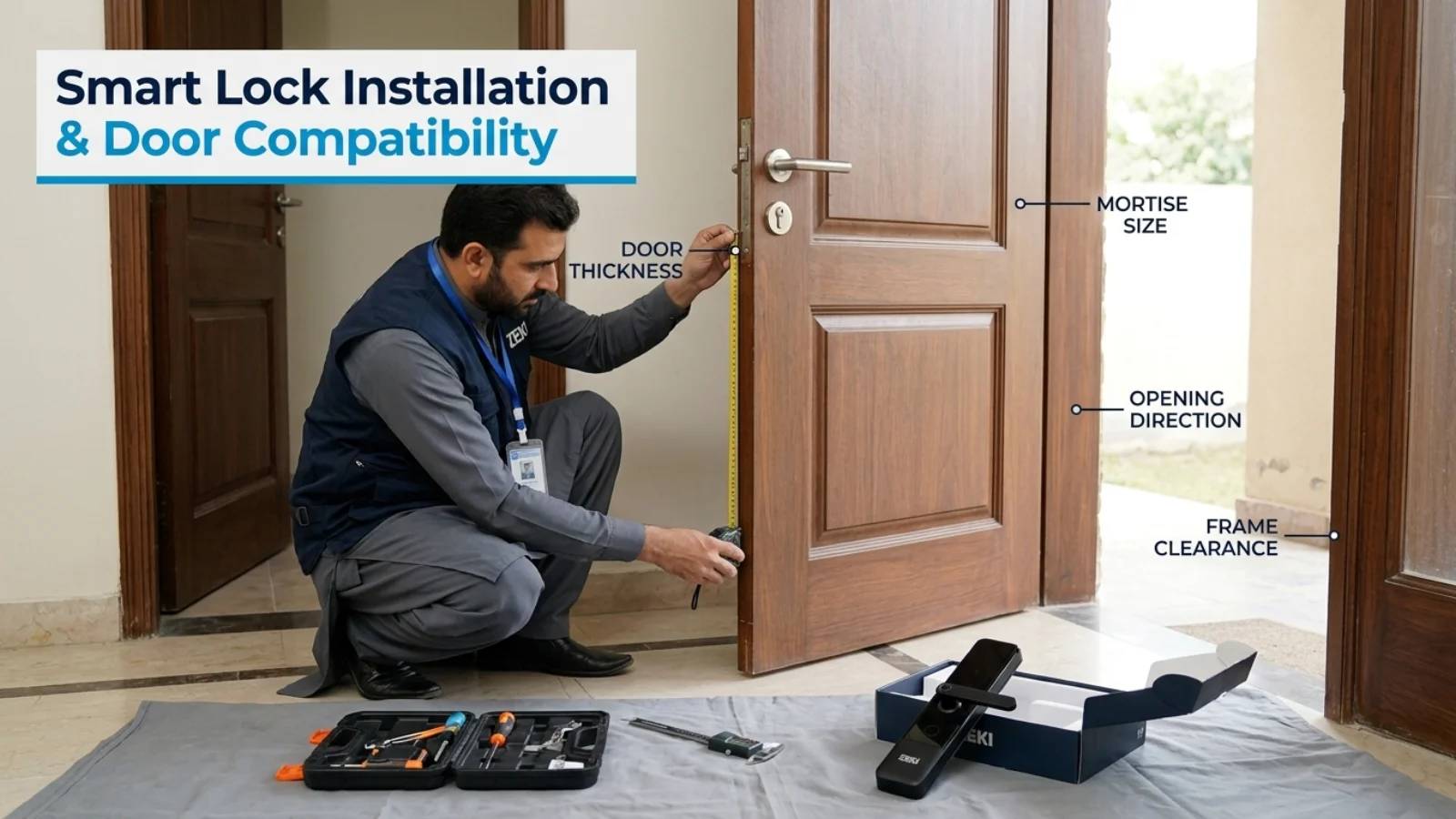
Important Measurements
Door Thickness
Confirm that the door falls within the lock manufacturer's supported thickness range.
Mortise Dimensions
Check the current lock body, faceplate, backset and relevant door preparation.
Opening Direction
Identify door handing and whether the door opens inward or outward.
Handle and Frame Clearance
Make sure the panel and handle will not interfere with the door frame or trim.
Door Material
Wood, metal and other door types can require different hardware and preparation.
Can You Replace a Traditional Lock With a Smart Lock?
Often, yes, but compatibility should be checked first.
Some doors may accept a compatible smart lock with limited preparation. Others may need adjustments or may not be suitable for the selected model.
Take photographs of the full door, current handle, lock body and door edge. Include measurements if available. This makes the initial compatibility review more useful.
Maintenance, Durability and Long-Term Cost Comparison
The cost of a lock includes more than its initial purchase price.
Buyers should consider maintenance, consumables, repairs, installation and potential replacement costs over time.
Traditional Lock Maintenance
Mechanical locks do not need batteries, but they can still require periodic maintenance.
Cylinders, handles, springs, latches and other moving components may wear or become misaligned.
Lost keys or compromised key control can also create replacement or rekeying costs.
Smart Door Lock Maintenance
A smart lock may require battery replacement or recharging, careful sensor cleaning and app or firmware maintenance where supported.
The electronic system does not eliminate physical wear in the lock body or door.
Which Lock Costs More?
Smart locks often have a higher initial purchase price because of their electronic components and added features.
However, the comparison is not universal. High-quality mechanical security hardware can also be expensive.
| Cost Area | Smart Lock | Traditional Lock |
|---|---|---|
| Purchase | Depends on biometrics, build and connected features | Depends on lock quality and security design |
| Installation | Depends on door preparation and lock compatibility | Depends on hardware and door preparation |
| Batteries | Normal maintenance expense on battery models | None for a fully mechanical lock |
| Access Changes | Supported digital credentials may be changed or removed | Physical keys may require duplication or rekeying |
| Repairs | Mechanical or electronic components may need service | Mechanical components may need service |
A cheaper lock is not necessarily better value if it does not meet the entrance's security, usability and access requirements.
Which Lock Is Better for Pakistani Homes?
Pakistani homes differ considerably in entrance construction, security needs, household size and daily access patterns.
A wooden main door in DHA Lahore may require a different physical installation approach from a metal apartment entrance or an older residential door.
For a Family Home
A smart lock may be attractive when multiple family members regularly use the same entrance and prefer fingerprint or PIN access.
A traditional lock remains a reasonable option where residents prefer simple physical keys and do not need digital credential management.
For a New House or Renovation
Planning the lock before the final door hardware is installed can help avoid unnecessary rework or incompatibility.
Check the actual lock dimensions and recommended door preparation with the relevant installer.
For Homes With Frequent Visitors
Smart locks that support individual users or appropriate temporary credentials may offer more flexibility than distributing physical keys.
These functions should be verified for the specific model before purchase.
For Areas With Load Shedding
Battery-powered smart locks can operate independently of continuous mains electricity for their supported local functions.
Buyers should still understand battery maintenance and emergency access.
Smart or Traditional Lock for Homes, Offices, Rentals and Hotels?
For short-term rentals, read our smart lock rental property guide for a closer look at guest check-in and credential management.
Which ZEKI Smart Lock Should You Consider?
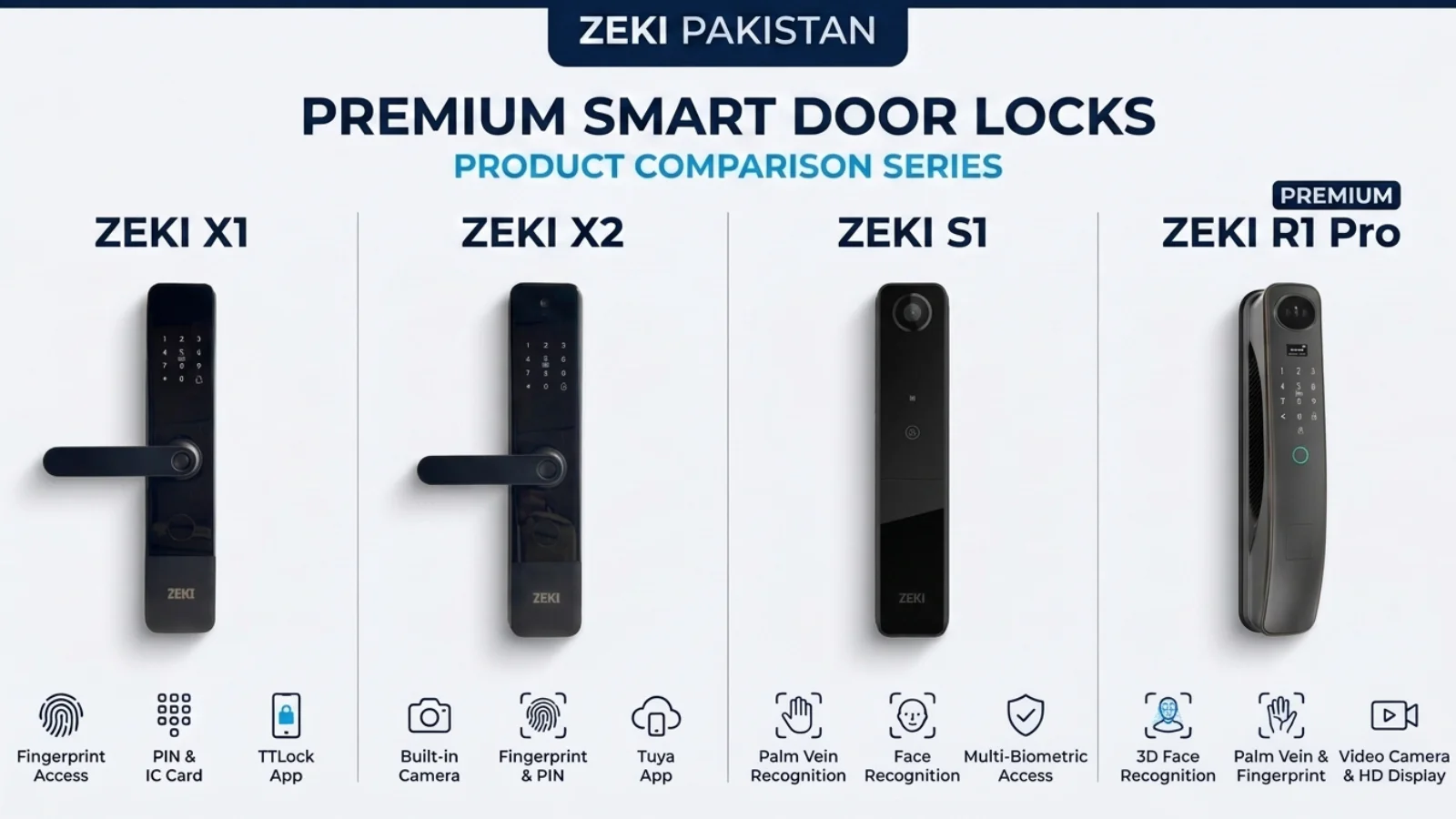
If you decide that keyless access is useful for your property, ZEKI offers several models with different biometric and connected features.
The best choice depends on your required authentication methods, door compatibility and budget.
ZEKI X1
A fingerprint-focused smart lock for buyers who want practical keyless access.
Supports fingerprint, PIN, IC card, mechanical key and TTLock app functions.
Uses four AA primary batteries and supports Type-C emergency power.
Explore ZEKI X1 →ZEKI X2
Designed for buyers who want local credential access alongside supported camera and connected doorbell features.
Includes fingerprint, PIN, IC card, mechanical key, camera, indoor display and Tuya connectivity.
Explore ZEKI X2 →ZEKI S1
A premium option combining palm vein, face recognition, fingerprint, PIN and IC-card methods.
It also includes a camera, indoor display and rechargeable lithium battery system.
Explore ZEKI S1 →ZEKI R1 Pro
A face-recognition-focused smart lock with additional palm vein, fingerprint, PIN and IC-card access.
The verified configuration also includes a video camera, 4.0-inch HD display and two-way voice.
Explore ZEKI R1 Pro →Confirm the lock's dimensions, door thickness, mortise, opening direction and frame clearance before placing an order.
Smart Door Lock vs Traditional Lock: Final Buying Checklist
Before choosing either option, review how the entrance will actually be used.
Which Lock Would We Recommend?
Choose a quality traditional lock if simple mechanical access meets your needs. Consider a compatible smart lock if fingerprint access, flexible credentials or supported connected features would genuinely improve daily use.
Thinking About Replacing Your Traditional Door Lock?
Not sure whether a smart door lock will fit your existing entrance?
Contact ZEKI Pakistan on WhatsApp at +92 304 7691488.
Send pictures of your full door, existing handle, door edge and lock body.
Also tell us whether you prefer fingerprint, camera, palm vein or face-recognition access so the relevant ZEKI model can be reviewed for compatibility.
Smart Door Lock vs Traditional Lock FAQs
Is a smart door lock better than a traditional lock?
A smart door lock may be better for users who value keyless access, individual credentials and supported connected features. A traditional lock may be better for users who prefer simple mechanical access without electronics.
Are smart locks more secure than traditional locks?
Not automatically. Security depends on hardware quality, locking components, credential management, door construction and correct installation. Neither category guarantees superior protection in every situation.
Can a smart door lock work without Wi-Fi?
Many smart locks support local fingerprint, PIN or card unlocking without internet access. Remote functions may require Wi-Fi, a compatible gateway or another internet connection.
What happens when the battery of a smart lock dies?
Electronic unlocking may stop responding. Depending on the model, an emergency external power connection or mechanical key may provide another way to access the door.
Do smart door locks work during load shedding?
Battery-powered smart locks can continue supported local operation during household power outages while their batteries are working. Internet-dependent features may be affected if network equipment loses power.
Can I replace my traditional door lock with a smart lock?
Often yes, but the selected smart lock must be compatible with the door's thickness, material, mortise, opening direction and frame clearance. Some doors require modifications.
Is a fingerprint lock safer than a key lock?
Fingerprint access can reduce dependence on carrying physical keys, but it does not by itself establish that the complete lock is more secure. Biometric implementation and physical lock quality both matter.
Which lock requires less maintenance?
A fully mechanical lock avoids battery and electronic maintenance, but mechanical parts can still wear. Smart locks may require battery maintenance and supported software updates in addition to mechanical upkeep.
Are smart door locks suitable for Pakistani homes?
Smart locks can be suitable for Pakistani homes when the chosen model is compatible with the actual door and meets the household's access requirements. Battery maintenance and emergency access should also be understood.
Are smart locks useful for rental properties?
Compatible smart locks may simplify guest access through supported PINs and remote management features. Exact capabilities depend on the model, app and connectivity configuration.
Which ZEKI smart lock is suitable for basic fingerprint access?
ZEKI X1 is a fingerprint-focused option that also supports PIN, IC-card access, mechanical key and TTLock app functions. Door compatibility should be checked before ordering.
Which is better for a home: a key lock or a biometric smart lock?
A mechanical key lock suits users who prioritize simple operation without electronics. A biometric smart lock suits users who want supported fingerprint, face or palm-based entry and are comfortable maintaining an electronic device.